

Burned Out by the Job You Care About
They say a picture is worth a thousand words.
Sometimes they’re worth an entire column.
In December, local gov communications manager Mariah Liendro posted the photo below on LinkedIn: dinner half-cooked, a laptop open on the counter, her toddler sick and crying in the next room. It was 5 p.m. The phone rang. A waterline break needed an emergency notice. And like every communicator reading that post, she did what the job demands: she put dinner on hold, shifted the toddler, grabbed the laptop, and got to work.
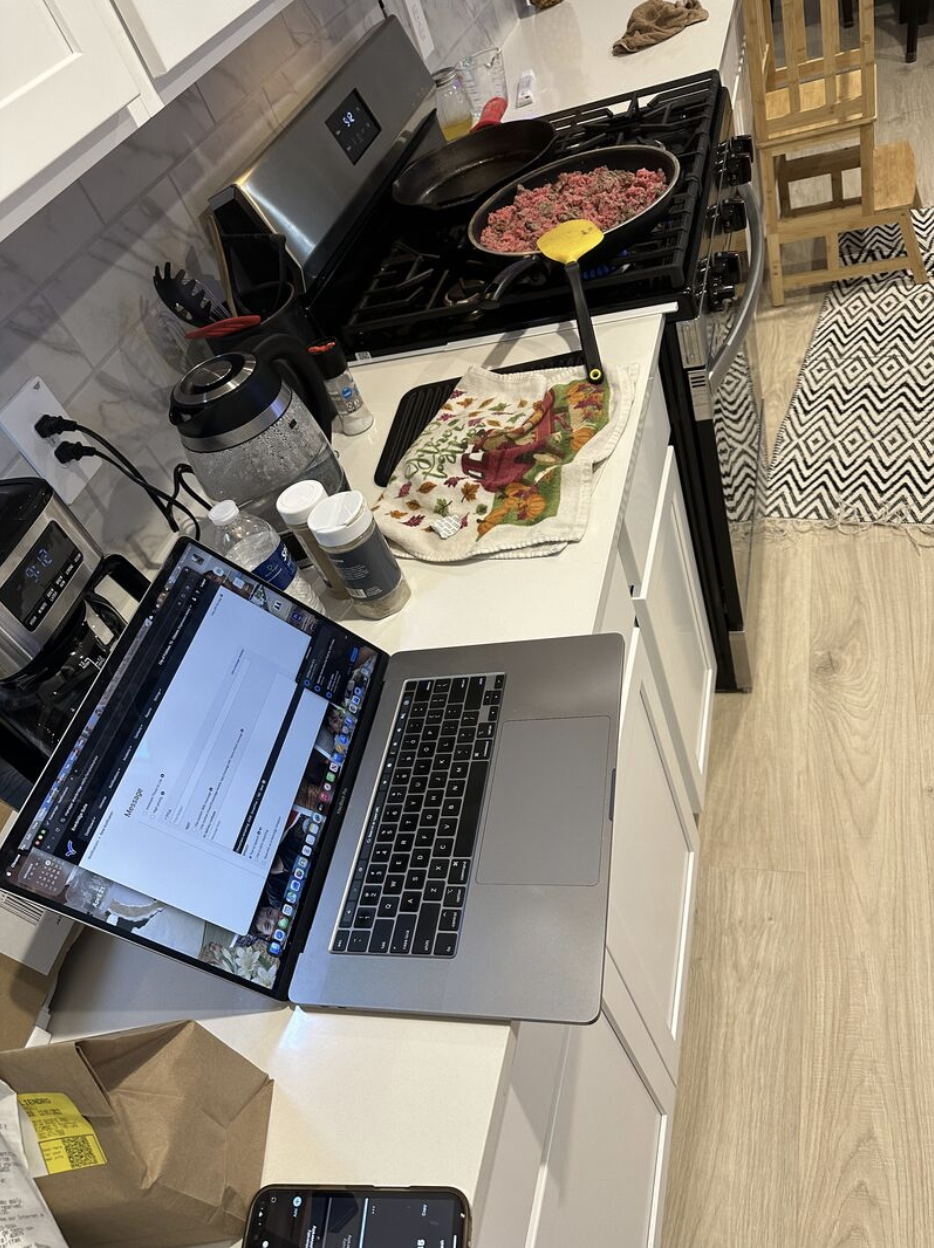
The pride in her post was real. The dedication was real. The exhaustion was real too—even if she didn’t frame it that way.
Mariah’s story hits so close to home because it’s not a one-off. It’s the life.
And that’s one of the reasons strategic planning for yourself isn’t something to get to when you have some free time (as if). It’s a survival skill.
The truth is, you can be incredibly proud of the work and still have it quietly hollow you out.
The Problem: You Don’t Realize You’re Lost Until You’re Lost

Miriam Dickler, left, and Marnie Schubert have lived the life, and are sharing the wisdom borne of demanding careers in local government.
When I interviewed local gov veterans Marnie Schubert and Miriam Dickler, both said some version of the same thing:
The worst part isn’t the crisis itself. It’s that you stop noticing what the crisis culture is doing to you.
Marnie told me that by the time September rolled around each year, she felt like she was on an island—convinced she was the only one who felt off-balance or overwhelmed. The annual 3CMA conference held the week of Labor Day gave her relief simply by showing her she wasn’t alone.
Miriam talked about how the job followed her everywhere—into CVS, on her honeymoon, even into her father’s hospital room—until her body started reacting every time her phone buzzed.
We celebrate people who “crush it” and stay reachable 24/7—until the bill comes due.
The Day-to-Day Crises Are the Ones That Break You
The slow erosion comes from the mini crises:
a pothole that blew someone’s tire
a water bill someone is furious about
a snowplow delay
a politically charged Facebook thread
an elected official demanding “five minutes” at your grandmother’s funeral
As Marnie put it: “Crisis is a really loose term in local government. It’s seven days a week and 365 days a year.”
This is what wears you down—not the big ice storm every few years, but the steady headwind that blows Every. Single. Day. It’s what Mariah experienced while cooking dinner last month. It was a potential health emergency, so stopping dinner to get out message on water safety had to be done. Taking a call during Nana’s funeral? Hard pass. The point is, both events exact a toll.
The Wake-Up Moments
Every seasoned communicator eventually hits a moment where the fog lifts and the cost becomes undeniable.
Marnie’s “Worthy Walk”
After leaving her long-time role in Queen Creek, AZ, Marnie started walking with her husband and their dog, Worthy. One day a woman greeted the dog by name … then looked at Marnie and said:
“Who are you?”
Her neighbors knew Worthy. They didn’t know her. She had spent years defined by her professional role in a community, not by who she was outside of it.
Miriam’s Line in the Sand
On the day of the Charlottesville events of 2017, the mayor demanded she “protect the city’s image.” Her answer was simple:
“My job is public safety today. Period.”
He called her insubordinate. He tried to get her fired. She held her ground.
Why This Framework Matters—and Who’s Teaching It
Marnie and Miriam are high performing pros who spent decades as PIOs, comms directors, and crisis managers in dynamic, politically charged, high-pressure environments. They’ve lived the late-night calls, the burnout, and the blurred identity that comes with the job.
Now independent consultants, they teach personal strategic planning to government professionals across the country. It’s hard-won wisdom they want the next generation to have.
The Framework: Strategic Planning for You
Local governments plan strategically. The folks working there rarely do. Here’s the roadmap Marnie and Miriam teach.
1. Start with Core Values
Values are the building blocks. They shape every decision—including the ones you regret. Most people breeze past this step because they think they “know” their values.
They don’t.
Miriam noted people default to the safe list: family, honesty, service. But digging deeper is where you get traction. When values become explicit, they start guiding behavior. They help you say no when everything around you pushes for yes.
2. Write a Personal Mission Statement
The biggest misconception? The goal isn’t to say everything—it’s to say the right thing.
Here’s the part many struggle with: You are one whole person. Your mission isn’t “work you” vs. “home you.”
It’s you you.
3. Create a Five-Year Vision
Burnout steals imagination. This exercise gives it back.
Where are you?
What are you doing?
How do you feel?
Vision work reminds you that wanting things for yourself is allowed—and necessary.
4. Conduct a Personal SWOT (Strengths, Weaknesses, Opportunities, Threats) Assessment
This is the quadrant where people get uncomfortable.
What do people struggle with most? Internal challenges, the habits they confuse with strengths.
Over-functioning
Taking on everything because “I can do it faster”
Crisis addiction
Making yourself indispensable in unhealthy ways
As Marnie said: “The things doing the most damage to us are the things making us successful.”
That’s exactly why this exercise matters.
5. Set S.M.A.R.T. Goals
Not epic, sweeping, “new year, new me” goals. Just real ones. For those unfamiliar with the term, S.M.A.R.T. stands for Specific, Measurable, Achievable, Relevant, Time-Bound.
Examples Miriam gave:
“Walk twice this week.”
“Call a friend—and schedule it.”
“Put the book you want to read on your calendar.”
Marnie hammered this home:
“If it’s meaningful, it belongs on your calendar.”
6. Make It a Living Document
Just like a city’s plan, your plan should evolve. Values stay mostly stable. But how you embody them changes.
Miriam compared it to marriage: You’re not married to the same person at 25 that you are at 50. Who you were at 30 isn’t who you are at 45. So why would your personal plan stay static?
The Cultural Shift Local Government Needs
We’re seeing more fire and police departments take mental health seriously. That attention needs to spread to everyone else in the organization.
The deeper work—handling the emotional load of constant crisis, political tension, and public scrutiny—goes largely unaddressed.
As Miriam said: “Everything happening in your city is happening to your employees too.”
Local governments often preach resilience without creating cultures that support it.
Build Your Accountability Community
You shouldn’t do this work, this self-care journey, alone. Find the people who remind you of your values, pull you back when you drift, and sit with you when the job hits hard. That’s what Marnie and Miriam do, even though they live in different states. They live what they teach: Support is a lifeline.
Closing Thought: Don’t Wait Until the Wake-Up Moment
Mariah’s photo is familiar because we’ve lived it.
But here’s the deeper truth:
The job will always demand everything from you. But you don’t have to give it everything you have.
Strategic planning for yourself isn’t indulgent or soft. It’s the only way to make sure the work you love doesn’t slowly erase the person doing it.
Make the time. Do the work.
Give yourself the same care and strategy you give your community.
Onward and Upward.